Forget Santorini—5 Greek Islands Without the Tourist Crowds
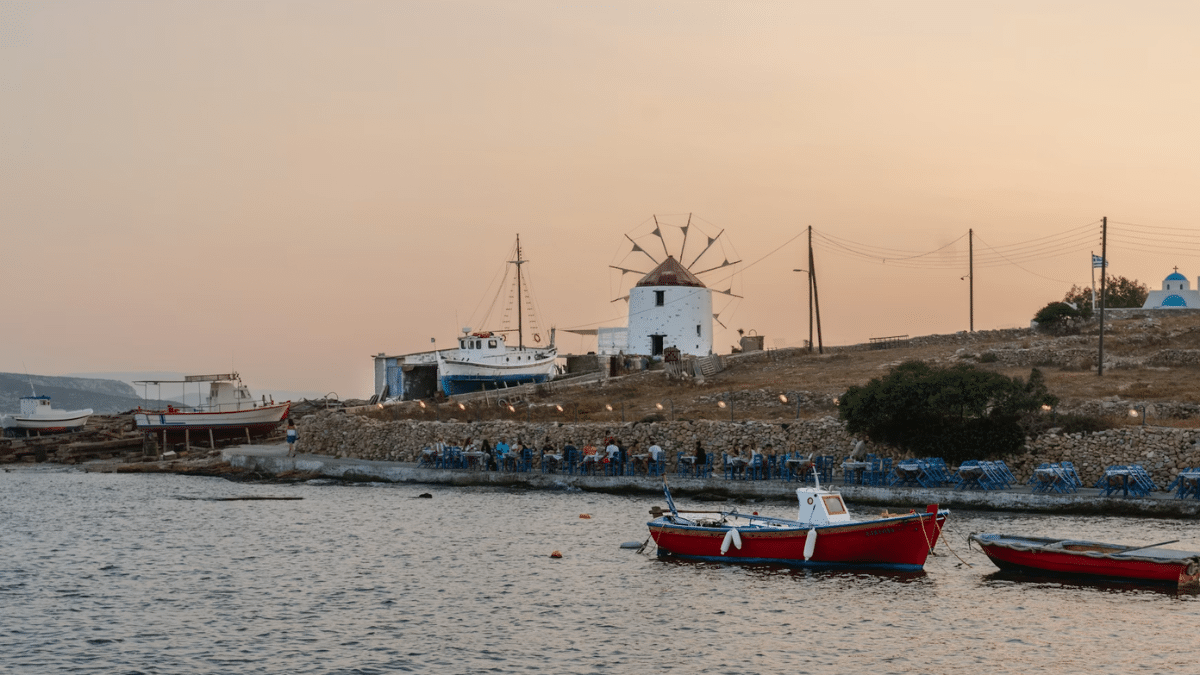
Every year, millions of travelers flock to Santorini and Mykonos—only to find themselves on crowded paths around the caldera, facing hotel prices well over 400 euros, and watching sunsets through a dozen selfie sticks. Yet Greece has more than 6,000 islands and islets—most of which never see a tourist who didn’t just happen to grow up there.
Greece has an image problem—but not the one you might expect. The difficulty isn’t that the country has too little to offer. It’s that a tiny fraction of the country absorbs nearly all the international tourism. Santorini now welcomes more day-trippers than the entire island has residents; during peak season, travelers jostle for every inch of the famous Caldera path.
But those willing to take a ferry instead of a direct flight will discover an entirely different Greece: quiet coves without lounge chairs, villages where the locals still know who the strangers are, and a hospitality that hasn’t been worn down by mass tourism. These five islands are proof of that.
1. Folegandros—the quiet jewel of the Cyclades

Anyone seeing Folegandros for the first time from the ferry is taken aback: the island rises from the sea like a rugged fortress, steep and inhospitable. Then you step into Chora—and forget everything else.
The island’s main village sits on a 300-meter-high rocky outcrop and is, for many travelers, simply the most beautiful chora in the Cyclades. Narrow alleys, bougainvillea-covered passageways, and small squares lined with taverns—here, life still takes place outdoors, but at a pace you can set for yourself. The medieval Kastro, whose white house facades serve as both city walls and residential buildings, is architecturally unique throughout the entire archipelago. Perched at the highest point is the Church of Panagia, reached by a steep staircase—the view of the deep-blue sea makes every drop of sweat worth it.
What has spared Folegandros from the mass tourist crowds is that there is no airport. Anyone coming here must take the ferry, at least from Piraeus or one of the neighboring islands. This small hurdle filters out a large portion of the fast-paced, transient tourism.
The beaches are not for the faint of heart—and that is precisely their charm. Agali Beach lies in a sheltered bay and is accessible by bus or on foot; its azure-clear water and coarse white sand make it one of the most beautiful on the island. Those seeking an even more secluded spot can take a boat to Katergo Beach in the south—no lounge chairs, no beach bar, just water, rocks, and silence.
Best time to visit: May through June and September, when Chora is pleasantly busy but not overcrowded.
Getting there: Ferry from Piraeus (approx. 5–6 hours by high-speed ferry) or from Santorini, Milos, or Ios.
Tip: The Chrysospilia Cave on the north coast was a place of worship in ancient times and contains inscriptions from the 4th and 3rd centuries B.C. – a find that is surprisingly little known.
Ad
2. Amorgos—Drama at the Edge of the Cyclades

Amorgos is the easternmost of the Cyclades, and it shows. The island lies halfway in the path of the winds sweeping down from the north, and the landscape bears this raw energy: sky-high cliffs, deep-blue water, and ancient mule trails winding through dry scrubland.
The Panagia Hozoviotissa Monastery is the island’s most famous structure and one of the most impressive in all of Greece: an 11th-century whitewashed building constructed directly into a vertical cliff face 300 meters above the sea—as if someone had carved a house into a cliff. Eight stories high, connected by narrow stone staircases. Those who climb the 350 steps are greeted with a chat over raki and loukoumades (sweet dough balls) by one of the few remaining monks—an experience simply not found on the more famous islands.
The public knows Amorgos from a different context: Luc Besson’s film “The Big Blue” (1988) was largely shot here. The unusually clear, deep waters surrounding the island have also attracted a loyal community of divers and snorkelers to this day.
Hikers will find an extensive network of ancient mule trails on Amorgos that connect villages, monasteries, and secluded coves. The trail from Chora to Agia Anna Beach is one of the classic hikes: it winds along ridges with panoramic views and ends at one of the island’s most beautiful beaches, where the cliffs drop straight into the sea.
Amorgos isn’t the place for lounge chairs and cocktail bars. It’s the place for people who want to explore Greece on foot and hardly encounter anyone else along the way.
Best time to visit: May through October, though July and August are the only months when things get a bit busier.
Getting there: Ferry from Piraeus (7–10 hours depending on the connection) or via Naxos.
Tip: The Chora of Amorgos, with its 13th-century Venetian castle, sits on a cliff 350 meters above sea level—early in the morning, when no one else is around, it’s an experience all its own.
Ad
3. Sifnos—the culinary heart of the Cyclades

At first glance, it’s not immediately clear what makes Sifnos special. It’s beautiful, of course—white villages, well-maintained hiking trails, great beaches. But so are dozens of other Cycladic islands. The difference lies on the plate.
Sifnos is considered Greece’s gastronomic island. This isn’t just a marketing slogan but has historical roots: Nikos Tselementes, author of the first modern Greek cookbook (1910), was from here. For generations, the island has produced a disproportionately large number of the country’s best chefs—a tradition that lives on in the taverns to this day.
The quintessential island dish is revythada: a chickpea stew cooked overnight in rainwater in a clay pot in the oven. The result is a creamy, deeply spiced soup that is as simple as it is distinctive. Just as indispensable: mastelo, lamb or goat meat, slowly cooked in red wine, as well as kaparosalata, a caper salad that you won’t find on the mainland in this quality.
The beaches live up to the village’s promise. Vathi is a sheltered bay in the southeast, whose semicircular shore is lined with a fishing village and several taverns—in the evenings, locals and travelers sit together under wooden roofs by the water. Kamares, the port town, has a long beach with fine sand. Cheronissos in the north is the insider’s tip for anyone seeking unspoiled beauty: a small fishing port nestled in a valley, with almost no tourist infrastructure.
Sifnos has no airport and no cruise terminals. Those who come stay. The typical length of stay is five to seven days—enough time to walk between all the villages and get to know the island at a leisurely pace.
Best time to visit: May through June or September, when the island comes alive and seasonal dishes are in full swing.
Getting there: Ferry from Piraeus (approx. 3–4 hours by high-speed ferry) or from Milos (approx. 1 hour).
Tip: Apollonia and Artemonas, the main villages in the island’s center, are connected by a walking path—walking the route in the evening, when the taverns open and the alleys come alive, is the best Sifnos has to offer.
Ad
4. Koufonisia – Greece’s Caribbean

There are travelers who visit Koufonisia once and then never speak of any other islands again. That might sound like an exaggeration, but it’s hardly an exaggeration.
Koufonisia is actually a pair of islands: the inhabited Ano Koufonisi and the uninhabited Kato Koufonisi, separated by a narrow strip of water. Together, they’re barely larger than a medium-sized village—but what beaches!
The water around Koufonisia is turquoise in a way you’d normally associate with the Caribbean or the Maldives, not the Aegean Sea. The color comes from the combination of light-colored sand, shallow bays, and the clear seawater. Pori Beach, a crescent-shaped arc in the north of the island, is one of the most beautiful beaches in Greece—no grid of beach chair vendors, no beach bar, just sand and sea. Italida, also known as Platia Pounda, offers similar water colors with even fewer people.
The village of Ano Koufonisi is a labyrinth of white alleyways perched on a small hill above the harbor. Everything here is nearby; while motorcycles and cars do exist, the island’s laid-back pace tempts you to leave them behind.
Koufonisia is no stranger to travelers—it has been a favorite among Greeks for years. But it hasn’t yet gained international recognition. That is slowly changing, which is why a visit in the coming years—especially in June or September—is advisable rather than waiting until prices and demand have risen.
Best time to visit: June or September. July and August fill up the island quickly, and accommodations are limited.
Getting there: Ferry from Piraeus (5–9 hours depending on the connection) or from Naxos (approx. 45 minutes).
Tip: A short boat trip to Kato Koufonisi is a must. The uninhabited island has a handful of expansive beaches that promise complete solitude for a few hours—especially in the off-season.
Ad
5. Kimolos – Milos’s Unspoiled Neighbor Island
Milos is known for its stunning beach scenery and colorful boathouses (syrmata) and attracts visitors accordingly. If you walk from Milos to the ferry in Pollonia and take the short crossing to Kimolos (10 to 15 minutes), you’ll arrive on an island that could resemble Milos in its former state: unhurried, authentic, and largely untouched.
Kimolos has no airports, no travel agencies, and no mass tourism. What it does have: the clearest water in the world, according to travel reviews, at Prassa Beach; a single main town (Chorio) with a medieval Kastro district; and picturesque fishing cottages at Psathi Harbor, whose boat shed doors are painted in shades of orange, blue, and yellow.
The beaches of Agios Georgios, Aliki, and Kalamitsi boast the same fine, white sand and milky-blue waters for which you’d pay hundreds of euros in accommodation costs elsewhere—except that hardly anyone is lying on them here. The infrastructure is modest: a few taverns, a handful of rental properties, and no hotel complexes.
The main town, Chorio, shows how Cycladic villages were built before tourism turned them into postcard scenes: without regard for Instagrammability, but with logic and function. The Kastro district, a medieval core with winding alleys and arched gateways, is of great architectural interest—and entirely ignored by most visitors.
Kimolos is an island for travelers who consciously choose to do without all the trappings of modern life. No shopping malls, no nightlife, no cruise ships in the harbor. Instead, it offers a Greece that feels quiet and unpretentious.
Best time to visit: June or September. In July and August, the island remains quiet compared to others, but booking early is recommended.
Getting there: Ferry from Piraeus (approx. 5–6 hours) or a short crossing from Pollonia (Milos)—just 10 to 15 minutes.
Tip: The colorful syrmata boat garage doors near Psathi Harbor aren’t just photo ops; they’re actively used fishing sheds—early in the morning, the harbor is bustling with activity.
Ad
What these five islands have in common
None of the five islands has an airport. This is no coincidence: the lack of direct flights is the most important structural safeguard against mass tourism. Those who take the ferry are making a conscious choice—and this decision filters out a certain type of traveler.
What you won’t find on these islands: infinity pools overlooking the caldera, clubs open until six in the morning, all-inclusive resorts, or cruise ships in the harbor. What you will find instead: taverns with daily specials, landlords who personally deliver the keys, beaches where no lounge chair rentals dominate the scene, and an Aegean Sea that actually still smells of salt and oregano.
Greece has enough islands to suit every type of traveler. Those willing to take a ferry will be rewarded.
All ferry connections depart from Piraeus; book through ferryscanner.com or ferryhopper.com. For accommodations on small islands, we recommend booking directly with local providers well in advance—options on booking platforms are often limited during the off-season.