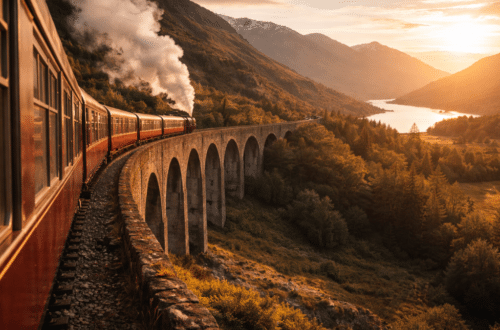

Six months traveling the world—why time is the real luxury
There is luxury that shines.
And there is luxury that is quiet.
Time belongs to the second category.
A six-month trip around the world is not an escape from everyday life.
It is a conscious decision against acceleration. Against shortcuts. Against the feeling that everything has to go faster and faster.
And that is precisely why this way of traveling seems absurd to many people at first.
Too long. Too expensive. Too radical.
Until you realize that it is not the extreme journey—it is our everyday life.
Why a trip around the world has nothing to do with wanderlust
People who travel the world are rarely searching for new places.
They are looking for a different rhythm.
Because after the first few weeks, something unexpected happens:
The world ceases to be exotic.
It becomes everyday life.
And that’s where the real journey begins.
Ad
Time changes perception
When you’re on the road for six months, distances lose their urgency.
You don’t have to “see everything.”
You don’t have to compare.
You don’t have to tick anything off a list.
Instead, space is created:
- for conversations
- for observation
- for boredom—and thus for clarity
Time becomes elastic again. And thus valuable.
Luxury reimagined
Luxury on a trip around the world does not mean:
- Golden fittings
- Formal evenings
- Status symbols
Luxury means:
- No moving every three days
- No packing rushing
- No decisions under pressure
A fixed location. And yet movement.
Why do many world trips today take place at sea
There are many ways to circumnavigate the globe.
But only one where you don’t constantly arrive and disappear again.
A world trip by ship creates continuity.
A home that moves.
That’s why many travelers consciously choose providers such as Regent Seven Seas Cruises—not because of the luxury, but because of the structure.
- Long layovers
- Hardly any stress from changing locations
- Everything organized, nothing rushed

Ad
Who this trip is not suitable for
We have to be honest.
This type of travel is not suitable if you:
- Confuse variety with speed
- Constantly need something new
- Feel uncomfortable when nothing is happening
A trip around the world requires patience.
And rewards it with depth.
The psychological effect of long journeys
Many report a similar point—usually after two to three months.
You stop comparing.
You stop judging.
You start just being.
This isn’t wellness.
It’s a change of perspective.
The question of price
Yes, traveling the world costs money.
But it costs something else first and foremost: willingness.
Willingness not to get carried away.
Willingness not to constantly fill your time.
Willingness to slow down compared to the rest of the world.
Conclusion
A trip around the world is not escapism.
It is a conscious use of time.
And perhaps that is the greatest luxury of our time.


You May Also Like
Kyoto instead of all of Japan—why depth changes more than speed
Antarctica—a place that makes you feel smaller. And that’s undoubtedly why it makes you feel bigger.