Thingvellir National Park: Where You Stand Between Two Continents
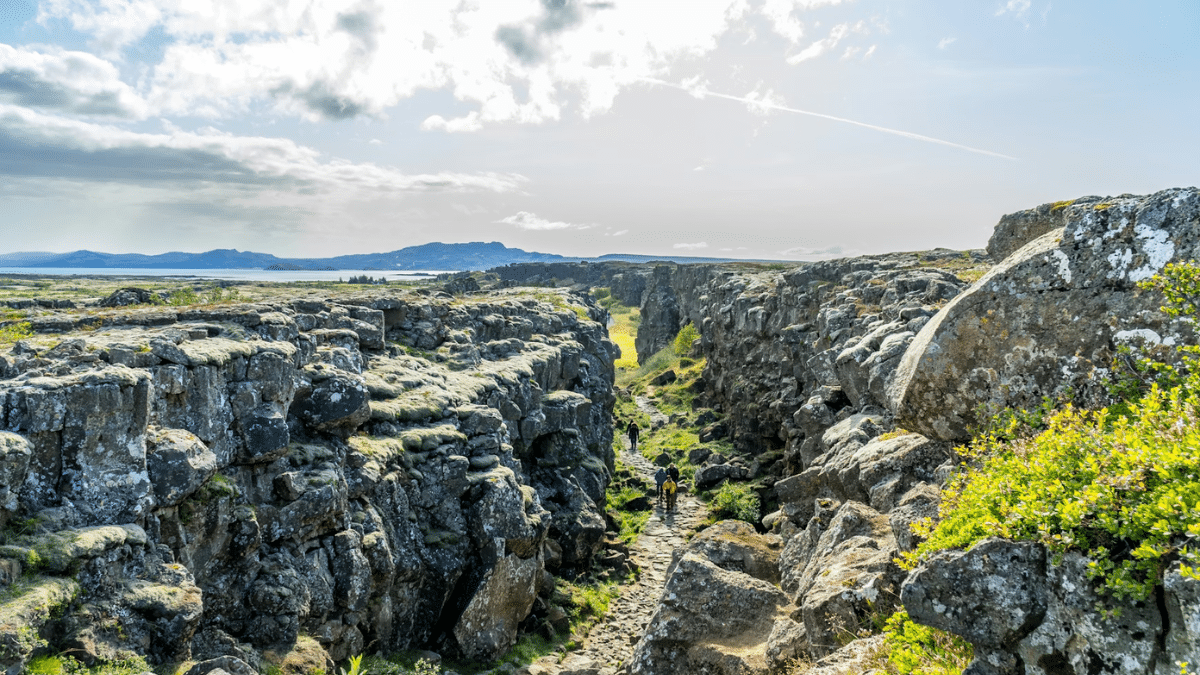
There are places on this earth that feel as if someone has briefly paused reality. Thingvellir National Park (in Icelandic: Þingvellir National Park) in Iceland is one such place. No beach, no skyline, no picture-perfect sightseeing backdrop from a travel brochure. Just lava, silence, and beneath your feet the slow, ceaseless dance of two continental plates. The North American and Eurasian plates are drifting apart here, year after year, millimeter by millimeter. Anyone standing here is literally standing on two continents at the same time. That’s not a metaphor. That’s geology.
No wonder travelers to Iceland put this place on their list long before they’ve even booked their flight.
What is Thingvellir National Park?
Thingvellir National Park is located about 40 kilometers northeast of Reykjavik, in the heart of the Icelandic highlands, and is part of the famous Golden Circle, the classic loop tour that also takes visitors to Geysir and Gullfoss Waterfall. Thingvellir has been on the UNESCO World Heritage List since 2004 for two reasons: its geological uniqueness and its historical significance as the cradle of Icelandic democracy.
The name itself offers a clue: in Old Icelandic, Thingvellir means “Parliament Plain.” Since the year 930 AD, Icelandic tribal chieftains have gathered here for the Althing, the world’s oldest parliament. Under the open sky, between lava walls, laws were proclaimed, disputes settled, and judgments rendered. This tradition endured for over 800 years.

Interesting fact: Iceland is getting wider every year
The tectonic plates beneath Thingvellir are drifting apart at about two centimeters per year. That might not sound like much. But it means Iceland is growing—year after year. And the fissure you can walk across in the national park will be even more visible in a few hundred years than it is today. So you’re not just a visitor—you’re a witness to a geological process in real time.
The Silfra Fissure: Diving Between Two Continents
If you want the full Thingvellir experience, you dive. Literally.
The Silfra Fissure is one of the few places in the world where you can snorkel or dive between two tectonic plates. The water is crystal clear, filtered through volcanic rock for decades. Visibility reaches up to 100 meters. The water temperature stays between 2 and 4 degrees Celsius year-round. It’s cold, yes, but you’ll be rewarded with an underwater landscape that feels like a slow-motion dream.
To dive in Silfra, you’ll need a certified guide and, depending on the provider, a dry suit. For snorkeling, a guided day package is usually sufficient, which you can book on-site or through one of the local tour operators. Be sure to take a close look at the different tours. A good drysuit for cold-water adventures* can mean the difference between an unforgettable experience and a very early end to your trip.

Ad
Hiking in Thingvellir National Park: What to Expect
You don’t have to go in the water to be impressed. The national park offers several hiking trails that wind through the rift valley landscape, past lava formations, across narrow bridges between the continental plates, and along Thingvallavatn, Iceland’s largest natural lake.
An overview of the main routes
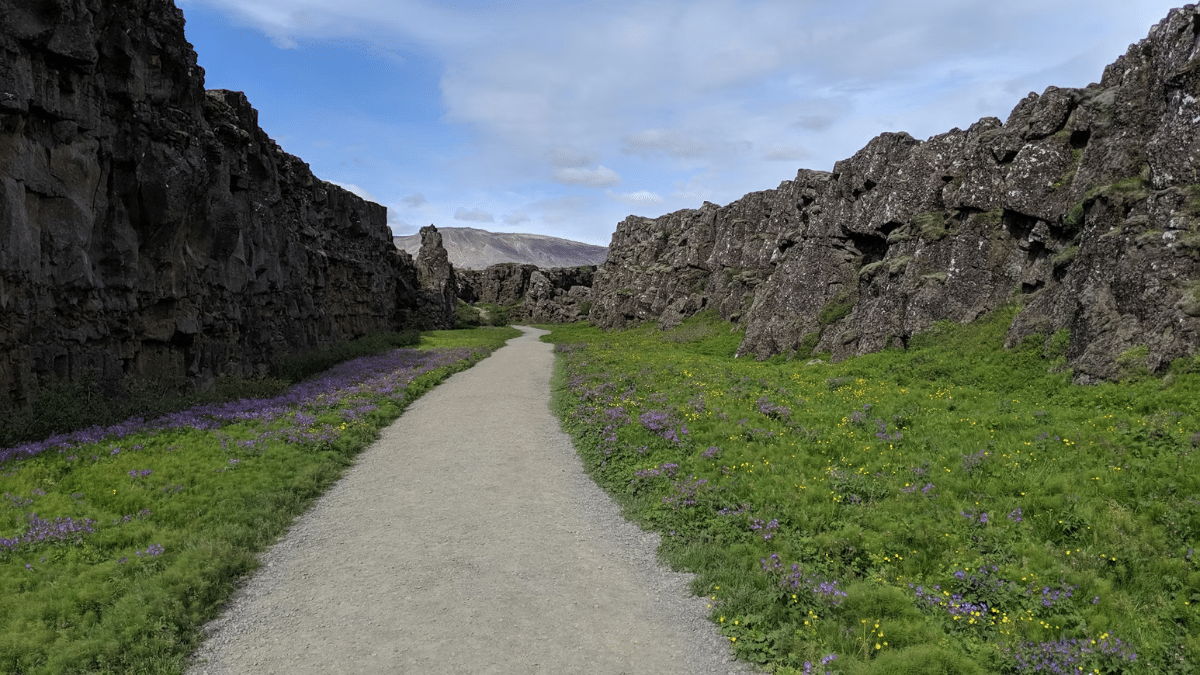
Almannagja Gorge: This is the classic route. This trail takes you through the impressive basalt fissure that runs along the edge of the North American plate. The walls rise to 32 meters. Justice was once administered here, and today you can walk through the same rock that surrounded Icelanders over a thousand years ago.
Oxara River: A quieter path along the river that winds through the park and looks almost unreal in the backlight. In the fall, the banks turn rich shades of red and orange.
Thingvellir Visitor Center Loop: For those who don’t want to walk far, there’s a short loop trail right at the visitor center with information panels on the park’s history and geology.
Interesting fact: The Althing influenced modern democracies
The Icelandic Althing is considered a direct precursor to parliamentary systems around the world. It was neither a monarchy nor a feudal state. It was an assembly where laws were created by consensus. Some historians view Thingvellir as one of the earliest examples of people governing without a king.
When is the best time to visit?
Thingvellir is open year-round and impressive no matter the season. But depending on your travel style, there is a best time to visit.
June through August is peak season. The midnight sun bathes the landscape in a constant golden glow. The hiking trails are dry, the days seem endless, and tourist numbers are correspondingly high. Those seeking peace and quiet should set out early in the morning or late in the evening.
September through October is perhaps the most beautiful time of year. The light grows warmer, the crowds thin out, and the autumn colors lend the landscape a melancholic depth that’s difficult to capture in photos but easy to cherish in your memory.
November through March means snow, cold, and the chance to see the Northern Lights over the tectonic fissures. Those who experience this will still be talking about it years later. A good sleeping bag or thermal gear is not a luxury here but a necessity.
How to Get to Thingvellir
Reykjavik is your starting point. From there, you have three options:
Rental Car: The most flexible option. The drive takes about 45 minutes via Route 36. A rental car also allows you to explore the entire Golden Circle in a single day. For winter travel, a suitable four-wheel-drive vehicle is recommended.
Guided tour: There are numerous day tours from Reykjavik that combine Thingvellir with the Geysir area and Gullfoss. Convenient if you don’t feel like navigating.
Public bus: During the high season, bus 51 runs from Reykjavik to the park. Less flexible, but sufficient for a day trip.
For entry into Iceland, we also recommend an eSIM card with a data plan so you always have service in the highlands, can download maps, and can be reached in an emergency.
What else you should know: practical tips
Admission: Entry to the national park itself is free. Snorkeling or diving in Silfra requires a guided tour, which typically costs between 80 and 160 euros per person.
Parking: Parking fees are charged at the main parking lots. Current rates: approximately 750 Icelandic kronur per vehicle per hour. Credit card payment is accepted.
Clothing: Layers are your friend. Even in summer, it can quickly get windy and cool in Thingvellir. Bring a waterproof jacket, good hiking boots, and sunscreen for the midnight sun.
Cell phone service: Signal is weak in parts of the park. Download maps in advance.
Ad
Interesting fact: Game of Thrones scenes were filmed here
Fans of the series may recognize Thingvellir: Parts of the Icelandic landscape served as the backdrop for the world beyond the Wall. The barren, almost apocalyptic expanse of the park makes this immediately understandable. You don’t have to be a fan to understand why directors want to film here.
Questions and Answers
Can I visit Thingvellir without a guide?
Yes, the park is freely accessible and well-signposted. You don’t need a guide for hikes on the main trails. However, a certified guide is required for diving and snorkeling in Silfra.
How much time should I set aside for my visit?
Two to three hours are sufficient for a quick visit. If you want to hike, go snorkeling, and explore the viewpoints, you should plan on spending a full day. Thingvellir pairs well with the rest of the Golden Circle.
Is the park worth visiting in winter?
Absolutely, as long as you’re well-equipped. The snow-covered landscape is breathtaking, and the chances of seeing the Northern Lights are significantly higher during the winter months. However, some trails may be closed due to black ice.
Can I stay overnight nearby?
There are several campgrounds right in the park that are open in the summer. There are also hotels and guesthouses in the surrounding area. If you prefer comfort, stay in Reykjavik and set off early the next morning.
Is the water in Silfra really that clear?
Yes. The water is filtered through lava fields for decades before it reaches the fissure. It is considered one of the clearest bodies of water in the world. The visibility is extraordinary, and the experience is just as remarkable.
Conclusion: Thingvellir is not just a destination. It is an experience.
There are travel destinations you simply check off your list. And there are places that leave a lasting impression. Thingvellir National Park falls into the second category. Anyone who walks through the Almannagja Gorge, dives in Silfra, or simply stands quietly on the shore of the lake and realizes that the ground beneath their feet is in the process of drifting apart takes home more than just photos. You take away a different conception of time.
Iceland isn’t a country you visit once and then know. It’s a country that calls you back. And Thingvellir is often the reason.