Taiwan—the island that everyone underestimates and no one wants to leave
It’s just past seven in the evening when the Raohe Night Market in Taipei becomes what it becomes every night: a single, steaming organism. At the entrance, right next to the colorfully lit Ciyou Temple, a man is sliding dumplings into a clay oven that looks like a tandoori oven and smells exactly like one. Pepper pork buns, costing less than two euros each. The line in front of it is twenty meters long, and no one is pushing. That’s perhaps the first thing you learn about Taiwan: Here, people wait patiently in line—and it’s always worth it.
Taiwan is the travel destination that has been appearing on every “must-visit” list for years and yet has never become overcrowded. An island smaller than the Netherlands, home to mountains nearly 4,000 meters high. A country with the density of temples found in Southeast Asia, the punctuality of Japanese trains, and street food that food bloggers fly thousands of kilometers out of their way to taste. And while half of Europe is stepping on each other’s toes in Kyoto, in Alishan you can wander almost alone through thousand-year-old cypress forests.
If you book now, you’ll catch a rare moment: Taiwan is fully developed for tourism but hasn’t been discovered yet. It’s precisely the window of opportunity when traveling is at its best.
Taipei—a capital city you underestimate until you’re up there
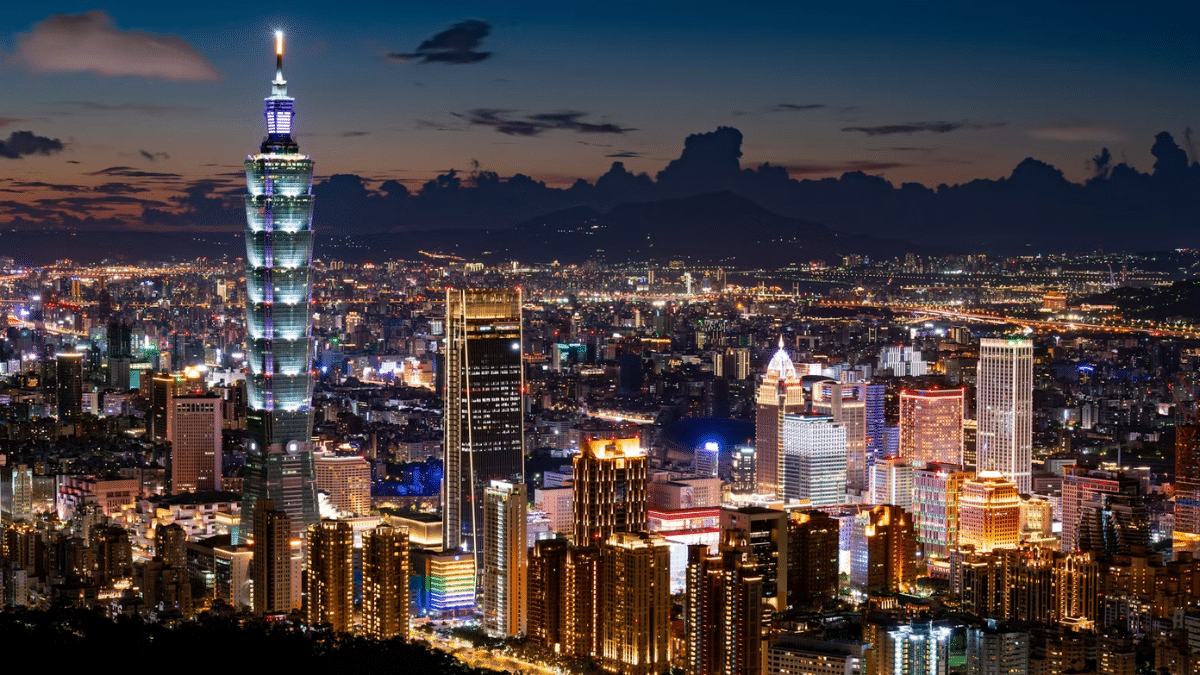
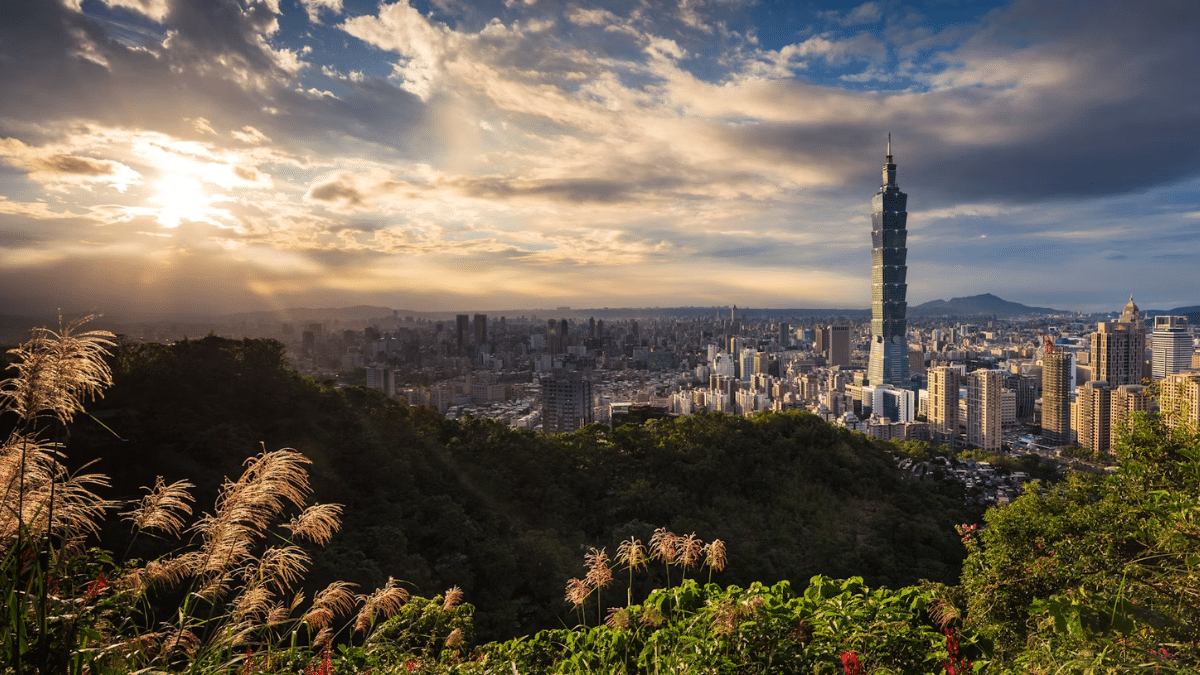
Taipei has no Colosseum, no Eiffel Tower, and no skyline like Hong Kong’s. What Taipei does have is a rhythm. During the day, streams of scooters wind their way through the urban canyons; in the evening, entire neighborhoods transform into open-air kitchens. Taipei 101, the world’s tallest building until 2007, towers over the city like a stack of bamboo shoots—but the best view of it is free: from Elephant Mountain, a short, grueling climb up a staircase on the eastern outskirts of the city, which you ascend at sunset to watch as the city turns on its lights.
In between lies a cultural richness one wouldn’t expect from this concrete city. The National Palace Museum houses one of the world’s largest collections of Chinese art treasures—the imperial collection from the Forbidden City, which was brought to the island in 1949. The Longshan Temple in the old Wanhua district has been in operation since 1738 and is bustling in the evenings with people casting divination sticks amid clouds of incense. And then there are the night markets: Taipei alone has over a dozen; Shilin is the largest, and Raohe the most atmospheric. A full meal—oyster omelet, stinky tofu, bubble tea (which was invented here)—rarely costs more than six to ten euros.
Best time to visit: October through April; in the summer, Taipei is humid and prone to typhoons.
Getting there: EVA Air offers four nonstop flights a week from Munich to Taipei, with a flight time of about twelve hours. From Frankfurt and Düsseldorf, you can fly with Cathay Pacific via Hong Kong.
Tip: Buy an EasyCard right at the airport—this rechargeable card can be used on the metro, buses, trains, and even at convenience stores throughout the country.
Jiufen—the mountain village that looks like a Ghibli movie
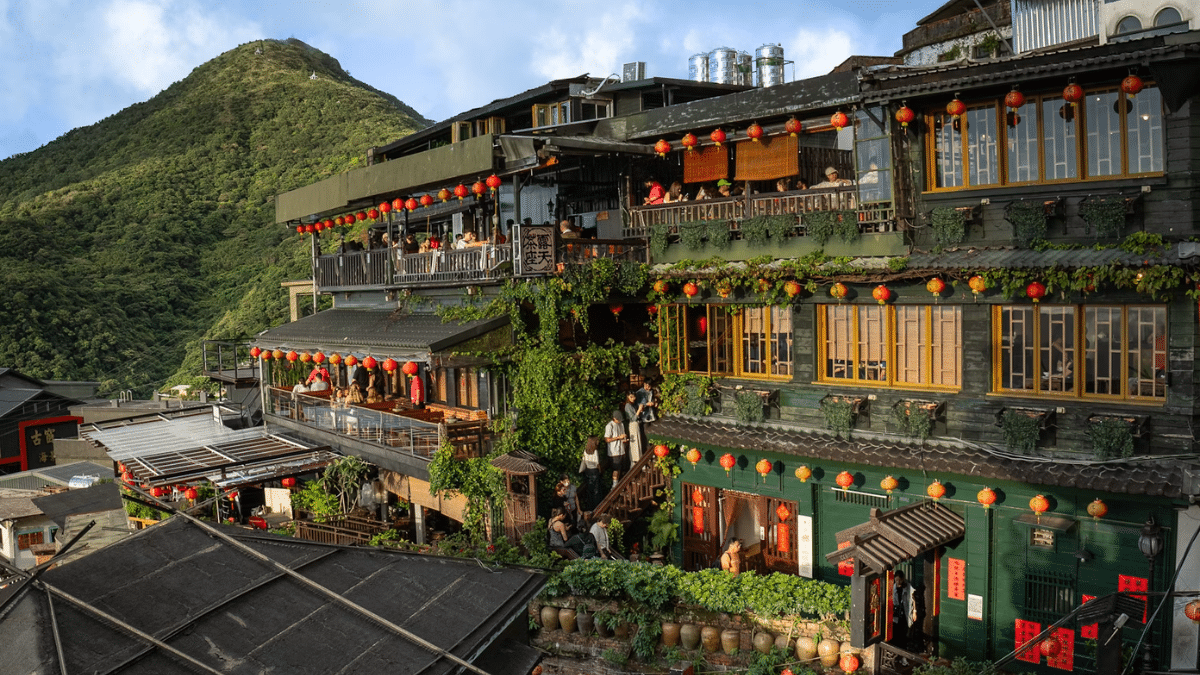
Just under an hour east of Taipei, Jiufen clings to a mountainside overlooking the Pacific Ocean. At the end of the 19th century, gold was discovered here, and the village exploded into a boomtown with teahouses, movie theaters, and opium dens—only to fall into a deep slumber after the gold rush ended, a slumber that preserved it. Today, red lanterns hang over the narrow Old Street, and when the fog rolls in from the sea in the evening, the multi-story A-Mei Teahouse actually looks as if Hayao Miyazaki had drawn it for “Spirited Away.” Although the director has always denied that Jiufen was the inspiration, the resemblance is nonetheless striking, and half of Asia makes the pilgrimage here to see it.
The trick is timing. During the day, tour groups jostle through the alleys; around 5 p.m., the buses leave—and then the place is all yours. If you stay overnight, you’ll experience Jiufen as it’s meant to be: empty alleys, lantern light, and the black sea below. On the way back, it’s worth stopping in Shifen, where visitors release wish lanterns—right from the train tracks, over which a train actually still rolls every 30 minutes. Pair that with taro balls in hot sweet soup, the local specialty you can find on every other corner in Jiufen.
Best time to visit: Possible year-round; often foggy in winter—which actually enhances the atmosphere.
Getting there: Take the train from Taipei to Ruifang and continue by bus, or take bus 965 directly from Ximen; the trip takes about an hour.
Tip: Visit and stay overnight during the week—after 6 p.m., Old Street is practically deserted.
Sun, Moon, and Lake, and Alishan—Taiwan’s Green Heart
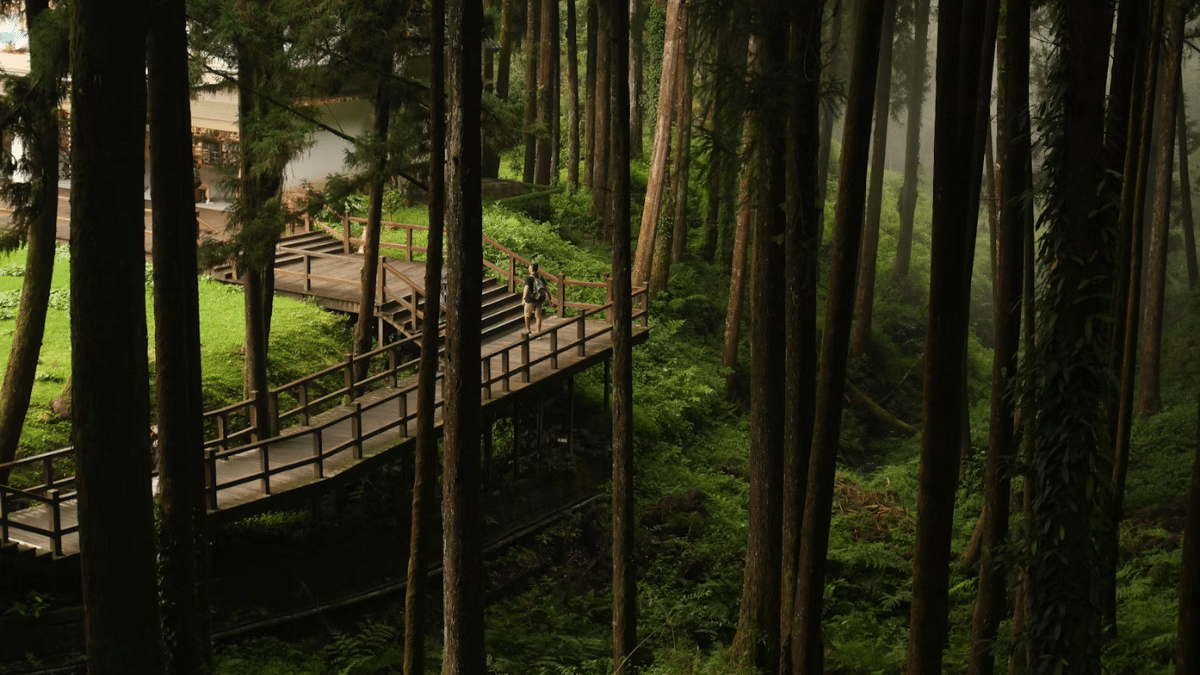
In the center of the island lies Sun Moon Lake, Taiwan’s largest lake, framed by forested mountain ranges that look like an ink wash painting on foggy mornings. CNN once ranked the bike path along the shore among the most beautiful in the world, and indeed, cycling around the lake—past the Wenwu Temple and the Ita-Thao settlement of the indigenous Thao people—is one of the most relaxing ways to experience Taiwan. E-bikes are available on every corner, and the cable car ride up to the lookout point costs just a few euros.
From there, the journey continues upward: Alishan, at over 2,200 meters, is Taiwan’s most famous mountain resort, yet it’s not the least bit pretentious. People come here for a ritual that Taiwanese have been celebrating for over a hundred years: the sunrise over the sea of clouds. At four in the morning, you board a train on the historic Alishan Forest Railway, a narrow-gauge line dating back to the Japanese colonial era that has been winding its way up the mountain since 1912 and, after years of typhoon-related closures, has been running continuously again since July 2024. At the summit, you wait with thermoses full of oolong tea until the sun rises from behind the clouds behind Yushan—at 3,952 meters, Northeast Asia’s highest mountain. Afterward: hiking among cypress trees that are older than most European cathedrals.
Best time to visit: October through April; November and March are considered the best months for hiking, and in the spring, the cherry trees bloom in Alishan.
Getting there: Take a bus to the lake from Taichung (about 1.5 hours); take a bus to Alishan from Chiayi, which is located on the high-speed rail line.
Tip: Book Alishan tickets for the forest railway online in advance—the sunrise trains sell out quickly on weekends.
Tainan and Kaohsiung—the south, where Taiwan is most Taiwanese
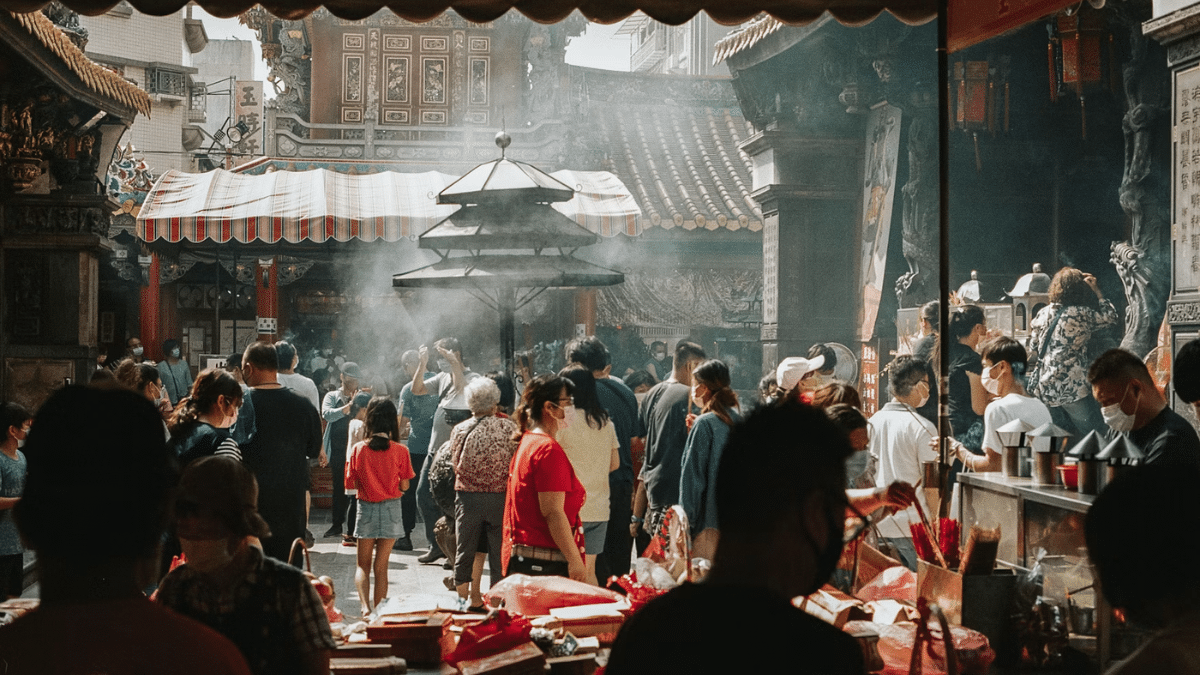
Tainan is the island’s oldest city, nearly 400 years old, founded by the Dutch East India Company and the capital for over two centuries. If you want to understand why Taiwanese people smile wistfully at the mention of Tainan, all you have to do is go out to eat: The city is considered the culinary capital of the country, home to dishes like Danzai noodles and “coffin bread”—fried toast filled with a seafood ragout that tastes much better than the name suggests. In between: over a thousand temples, many of them the oldest on the island, where daily life unfolds rather than tourism. The Confucius Temple, built in 1665, was Taiwan’s first school.
Half an hour south by train, Kaohsiung reveals a different side of Taiwan: the former port and industrial city has reinvented itself over the past fifteen years. The old warehouses at the harbor have been transformed into the Pier-2 Art Center, a creative district brimming with galleries, street art, and cafés; the Lotus Pagodas on Lotus Lake are among the country’s most photographed landmarks. And if you want to take the contrast to the extreme, take the ferry to the offshore island of Cijin: a five-minute crossing, and you’ll find yourself among fish stalls and black volcanic sand.
Best time to visit: The south is warmer and drier than the north—from November through March, temperatures here range from a pleasant 20 to 25 degrees.
Getting there: Take the THSR high-speed train from Taipei to Tainan or Kaohsiung—the trip takes about two hours.
Tip: In Tainan, explore the neighborhood around Shennong Street—a restored commercial alley from the Qing Dynasty, illuminated by lanterns in the evening.
Taroko Gorge—the Wounded Giant of the East Coast
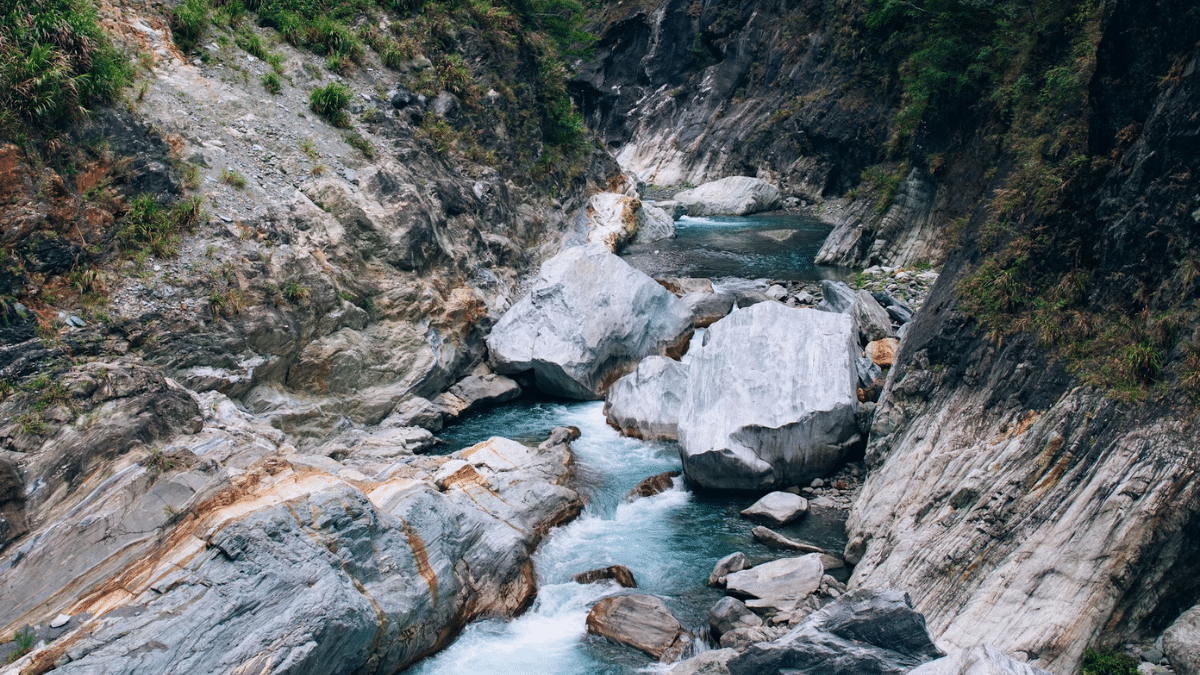
For decades, Taroko Gorge was Taiwan’s postcard image: a marble gorge carved by the Liwu River to a depth of up to 1,000 meters. Then came April 3, 2024. A 7.2-magnitude earthquake shook the region around Hualien; rockslides buried roads and hiking trails, and the national park was closed. Since then, Taiwan has been working on reopening the area—and the progress so far is better than feared: Of the 28 damaged road sections, 23 have been restored, and the visitor center and several hiking trails, such as the Chongde Trail and the Dali-Datong Trail, are accessible again. However, full reopening—including the four destroyed tunnels—will still take years.
Does that mean you should skip the east coast? On the contrary. Currently, the region around Hualien is especially in need of visitors, and Highway 11—which runs along the Pacific coast toward Taitung—is one of the most spectacular roads in Asia anyway: cliffs on the left, rice fields on the right, and fishing villages and hot springs in between. The East Rift Valley, with its bright-green rice terraces near Chishang, remains untouched by the earthquake—and is so deserted that when cycling through the fields, you often won’t see a single person for minutes on end.
Best time to visit: October through April; typhoons most frequently hit the east coast in the summer.
Getting there: Take the train from Taipei to Hualien—about two hours; once there, it’s a good idea to rent a scooter or hire a driver.
Tip: Before your visit, check the current opening status of the Taroko Trails on the national park’s website—it changes frequently.

Practical Information: Visas, Costs, and the Typhoon Situation
First, the good news: Taiwan is one of the easiest countries in Asia to travel to. German citizens can enter visa-free for up to 90 days—the only requirement since 2025 is to fill out the digital entry card (TWAC) online in advance, no earlier than three days before arrival; it’s free and takes just a few minutes to complete. You can get by just fine with English in the cities; in rural areas, translation apps and a helpfulness that’s almost proverbial are helpful: Taiwanese people who readily escort strangers to the train station aren’t just an anecdote, but a common experience on almost every trip.
The budget is also quite manageable. Street food costs one to two euros per dish, a double room in a decent mid-range hotel starts at 50 to 70 euros, and the rail network—from high-speed trains to local lines—is affordable, punctual, and extensive. For a first round trip, you should plan on ten to twelve days: Taipei, Jiufen, Sun Moon Lake, Alishan, Tainan, and Kaohsiung—this is the classic itinerary, which can be completed entirely by public transportation. That leaves the question of typhoons: From June through September, cyclones can hit the island, with peak activity in July and August. If you’re flexible, travel between October and April—and you’ll experience Taiwan at its best: clear, mild, and with seas of clouds over Alishan.
Best time to visit: October through April; cherry blossoms in Yangmingshan National Park starting in February.
Getting there: Nonstop from Munich with EVA Air (approx. 12 hours) or with one stopover from Frankfurt, Düsseldorf, and Vienna.
Tip: Fill out the TWAC entry card only through the official government website—it’s free; third-party sites charge unnecessary fees.